- Welcome to Asha Tea Company
- +91 9082650573
- ashateacompany01@gmail.com

There is a particular kind of exhaustion that comes from needing to be right.
You know the feeling. A disagreement with a colleague. A sharp exchange with someone
you love. A comment online that you just cannot let go unanswered. Something in you locks
in, and suddenly the point of the conversation is no longer the point at all — it is winning.
Being seen as correct. Having the last word.
We call these battles arguments. But really, they are wars of ego. And like all wars fought for
ego, there are no true winners — only two people who have forgotten what they were
actually fighting for.
Ego measures victory in a strange currency: being right, being superior, being unbeaten. It
convinces us that stepping back is weakness, that letting go is defeat, that silence is
surrender.
But look closer at what “winning” an ego war actually costs. It costs peace. It costs
connection. It often costs the very relationship you were arguing within. You may walk away
with the last word — and an emptier chest.
Meanwhile, the one who releases the need to win — who chooses stillness over the sharp
retort, who lets the other person have their moment — walks away with something the
“winner” quietly lost: their calm, their clarity, their center.
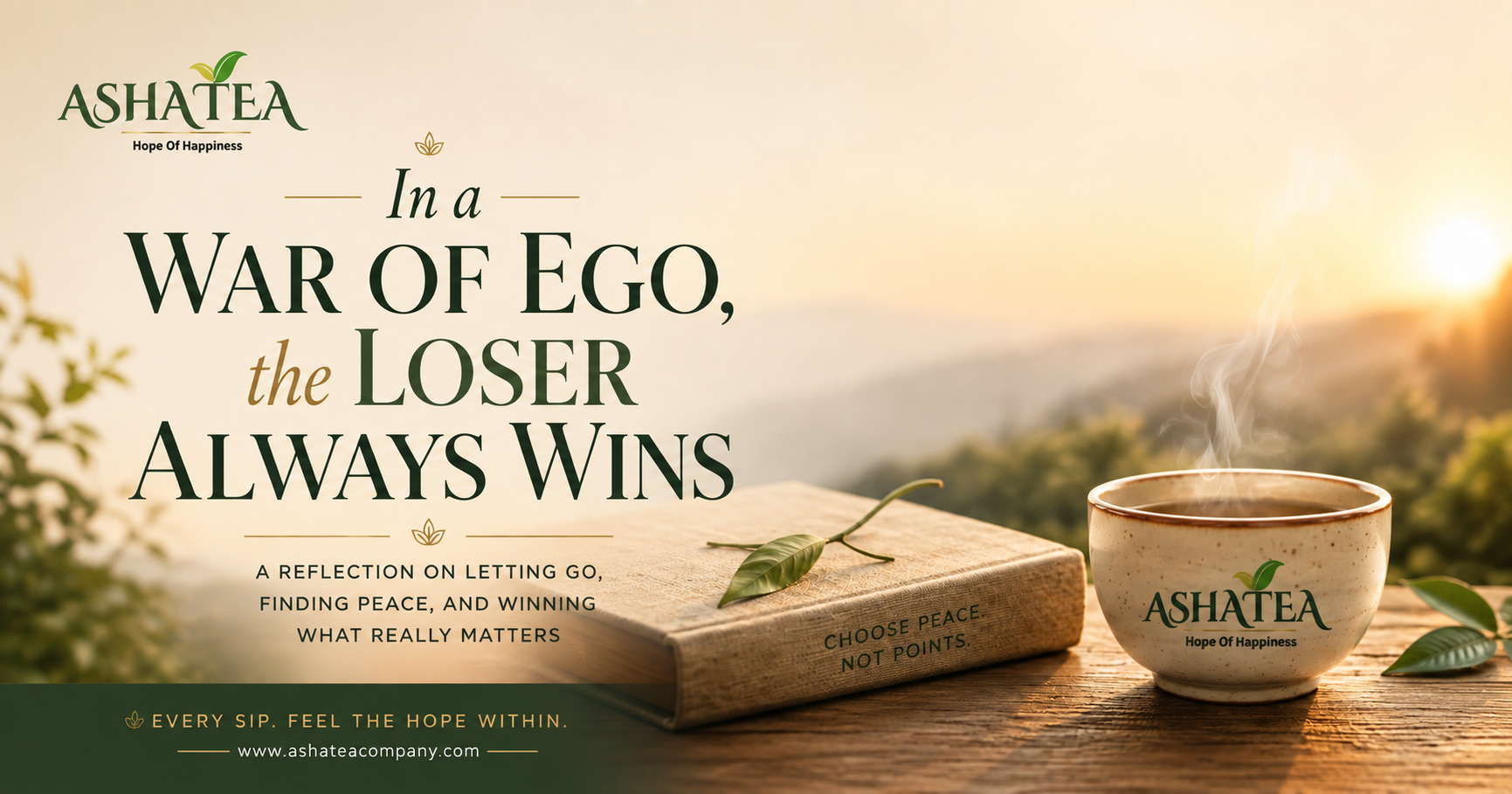
This is the paradox at the heart of it: in a war of ego, the loser always wins.
This idea is not new. It is ancient — woven through the Bhagavad Gita in the teaching of
nishkama karma: action without attachment to outcome. Krishna’s counsel to Arjuna was
never “do nothing.” It was “act, fully and rightly, but release your grip on the result.”
Applied to our daily battles, this becomes radical. Speak your truth — but release your grip
on being proven right. Show up fully in the relationship, the conversation, the disagreement
— but let go of the need to control how it ends or who is seen as victorious.
This is not passivity. It takes far more strength to stay grounded than to strike back. Egowants reaction. The self wants peace. Choosing peace, again and again, is the real
discipline.
This is where I keep returning, again and again, in my own journey — the difference between
romancing your ego and romancing your mind.
Romancing your ego means feeding the part of you that needs external validation — needs
to win, needs to be admired, needs to be right. Romancing your mind means cultivating an
inner relationship so steady that you no longer need the argument to end in your favor to
feel whole.
One depletes you. The other fills you back up.
The next time you feel the pull of an ego war — the tightening in your chest, the need to
respond, to correct, to win — try this instead.
Pause. Put the kettle on. Let yourself steep in something slower than the moment demands.
There is a reason tea has been part of contemplative practice across cultures for centuries
— the ritual itself asks you to slow down, to breathe, to return to yourself before you return
to the conflict. A cup of our Calm & Sleep blend in the evening, or Digestive Wellness after
a tense exchange, is not a magic fix. But it is a small, deliberate act of choosing your center
over your ego. A moment to remember what you actually want — peace, not points.
So the next time you feel yourself gearing up for a war of ego, ask yourself: what am I
actually trying to win?
If the honest answer is connection, understanding, or peace — you will not find it at the
finish line of an argument. You will find it in the letting go.
Lose the war. Keep your peace. That is the only victory that was ever worth having.
With gratitude and stillness, Asha
Asha Tea Company | Hope of Happiness




The Loneliness We Don't Talk About | Finding Connection With Tea
August 21, 2026[…] In a War of Ego, the Loser […]