- Welcome to Asha Tea Company
- +91 9082650573
- ashateacompany01@gmail.com

For millions of people, tea is much more than a morning beverage.
It is the first quiet moment before a busy day begins. The warmth of the cup, the soothing aroma, and the comforting ritual create a sense of calm that few drinks can offer.
But while tea is often appreciated for its taste and tradition, something remarkable is happening inside every cup—something invisible to the eye yet powerful enough to support your body’s natural wellbeing.
Every sip delivers naturally occurring plant compounds that modern science continues to study for their role in protecting cells, supporting heart health, improving metabolism, and promoting healthy aging.
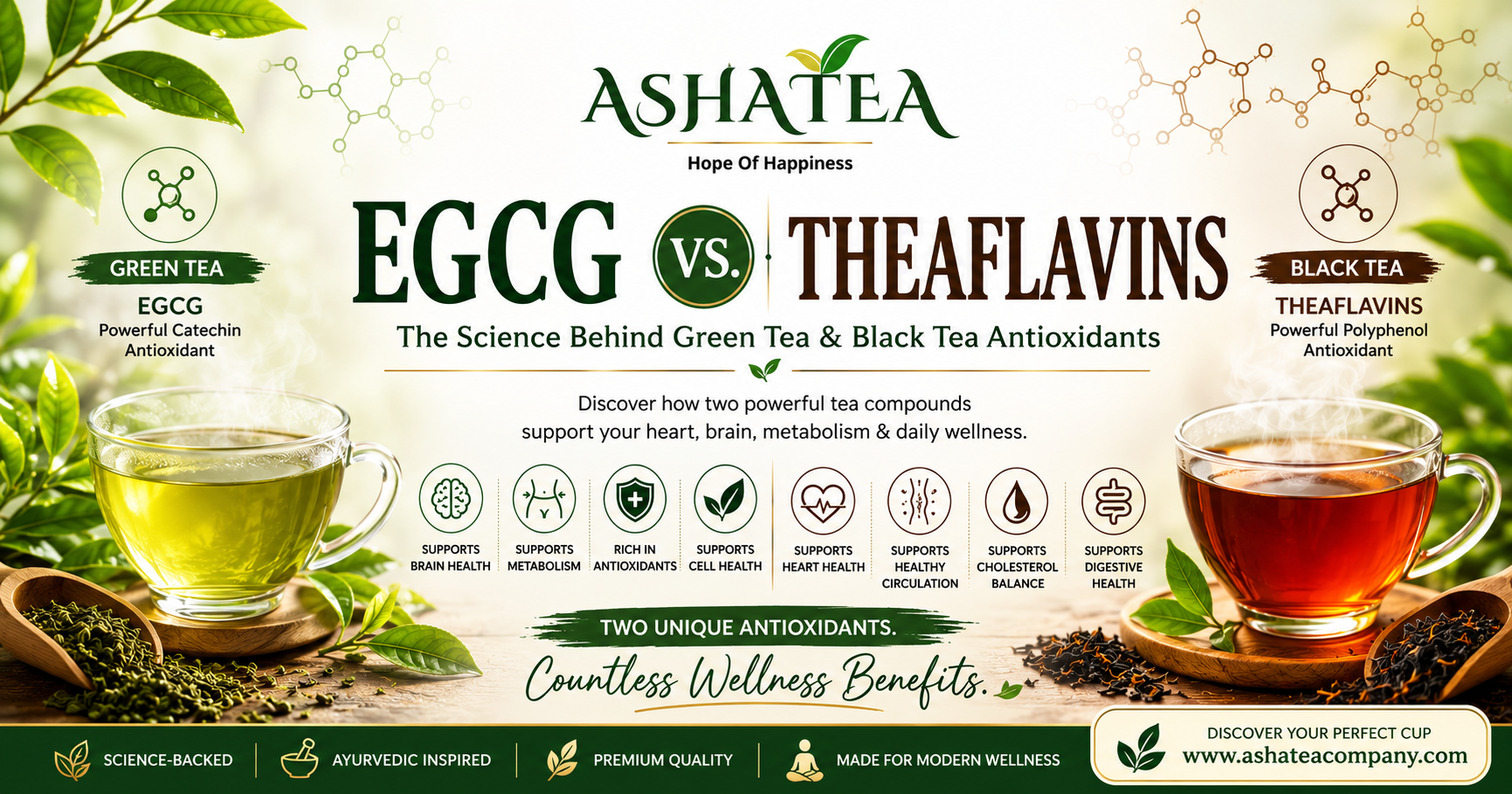
Among these compounds, two antioxidants stand out above the rest: EGCG and Theaflavins.
Although both originate from the same tea plant, they are created through completely different processing methods and work in unique ways inside the body.
At Asha Tea Company, we believe that understanding the science behind your tea transforms an everyday habit into a mindful wellness ritual. Inspired by Ayurvedic wisdom and supported by modern nutritional research, our carefully crafted teas are designed to help you enjoy both exceptional flavor and meaningful health benefits.
In this guide, we’ll explore the fascinating story of EGCG and Theaflavins, discover how they are formed, understand how they support different areas of the body, and learn how proper brewing helps unlock their full potential.
Because when you understand what is inside your cup, every sip becomes more meaningful.
One of the biggest surprises for many tea lovers is that green tea, black tea, white tea, and oolong tea all come from the same remarkable plant—Camellia sinensis.
If they all begin as the same leaf, why are their colors, flavors, aromas, and health properties so different?
The answer lies in one fascinating process:
Oxidation.
Oxidation begins the moment freshly picked tea leaves are exposed to oxygen.
You may have noticed a similar reaction when a sliced apple gradually turns brown after being left in the open. Tea leaves undergo a comparable natural transformation, but in tea production, this process is carefully controlled to create different types of tea.
The degree of oxidation determines not only the flavor and appearance of the tea but also the type of antioxidants it contains.
This is where the stories of EGCG and Theaflavins begin.
When producing green tea, tea artisans work quickly to preserve the leaf’s original character.
Soon after harvesting, the leaves are gently steamed or pan-fired to stop oxidation almost immediately.
This simple yet important step locks in many of the tea leaf’s natural compounds, particularly a family of antioxidants known as catechins.
Among these catechins, one compound has attracted extraordinary scientific interest:
EGCG (Epigallocatechin Gallate).
EGCG is the most abundant catechin found in green tea and is widely recognized as one of nature’s most powerful plant-based antioxidants.
Because green tea undergoes very little oxidation, much of its original EGCG remains intact until brewing, allowing tea drinkers to enjoy a beverage naturally rich in protective polyphenols.
This is one reason green tea has become one of the most researched beverages in nutrition science.
Researchers continue to investigate how EGCG may support:
At Asha Tea Company, our premium green tea blends are carefully selected to preserve these delicate compounds while delivering a clean, refreshing flavor that makes wellness an enjoyable daily ritual.
Black tea follows a completely different journey.
Instead of preventing oxidation, tea makers intentionally allow freshly harvested leaves to oxidize under carefully controlled conditions.
As oxygen interacts with the natural catechins inside the leaf, remarkable chemical changes begin to take place.
The simple catechins gradually combine and transform into larger antioxidant compounds called:
These newly formed compounds give black tea its rich amber color, bold aroma, smooth body, and distinctive malty flavor.
Rather than reducing tea’s nutritional value, oxidation creates an entirely different antioxidant profile.
This is why black tea offers wellness benefits that complement—rather than compete with—those of green tea.
Modern research suggests that Theaflavins may help support:
This transformation reminds us that wellness can take different forms.
Green tea preserves.
Black tea transforms.
Both begin with the same leaf.
Both nourish the body in their own unique way.
It’s easy to think of tea simply as “healthy,” but understanding the difference between EGCG and Theaflavins helps you make more informed choices based on your personal wellness goals.
If you’re seeking a light, refreshing tea rich in original catechins, green tea may be your ideal companion.
If you prefer a bold, satisfying brew with unique antioxidants formed through oxidation, black tea offers its own remarkable advantages.
Neither is better than the other.
Together, they demonstrate the incredible versatility of nature—and how a single tea leaf can support wellbeing in different yet complementary ways.
At Asha Tea Company, we celebrate both traditions, crafting premium teas that honor the science of nutrition while embracing the timeless principles of mindful living.
Among all the natural compounds found in tea, EGCG (Epigallocatechin Gallate) has attracted enormous attention from scientists around the world.
Why?
Because EGCG doesn’t simply act as an antioxidant—it works deep within the body’s cells, supporting many of the natural processes that help maintain overall health.
Every day, your body produces unstable molecules called free radicals. These molecules are created naturally during metabolism but can also increase due to pollution, stress, smoking, processed foods, poor sleep, and UV exposure.
When free radicals outnumber your body’s natural defenses, they create a condition known as oxidative stress.
Over time, oxidative stress may contribute to premature aging and reduced cellular efficiency.
This is where EGCG becomes especially valuable.
As one of the most potent catechins found in green tea, EGCG helps neutralize free radicals before they can damage healthy cells. Rather than replacing your body’s natural defense systems, it works alongside them, helping maintain a healthy balance.
This protective role is one of the key reasons green tea has become one of the most researched beverages in nutrition science.
One remarkable characteristic of EGCG is its ability to cross the blood-brain barrier—a protective layer that regulates which substances can enter the brain.
Because of this unique ability, researchers continue to study how EGCG may support long-term cognitive wellness.
Emerging research suggests that EGCG may help:
While tea should never be viewed as a treatment for medical conditions, enjoying antioxidant-rich green tea as part of a balanced lifestyle may contribute to long-term brain wellness.
Another reason tea promotes calm focus is the presence of L-theanine, a naturally occurring amino acid found almost exclusively in tea.
When combined with tea’s moderate caffeine content, L-theanine helps create what many tea drinkers describe as calm alertness—steady focus without the jitteriness often associated with coffee.
For students, professionals, creatives, and anyone seeking sustained concentration, this combination makes green tea an excellent daily companion.
Metabolism is much more than simply “burning calories.”
It refers to the countless chemical reactions that convert food into energy, repair tissues, and keep your body functioning efficiently.
Scientists continue to investigate how EGCG may naturally support healthy metabolic function.
Research suggests that EGCG may:
It’s important to remember that tea is not a shortcut to weight loss.
Instead, it works best as one element of an overall healthy routine that includes balanced nutrition, regular physical activity, quality sleep, and stress management.
At Asha Tea Company, we believe lasting wellness comes from small, consistent habits—not quick fixes.
While green tea preserves its original catechins, black tea develops a completely different group of beneficial compounds during oxidation.
These compounds are known as Theaflavins.
Theaflavins are responsible for black tea’s rich amber color, smooth body, and bold flavor.
More importantly, they have become an exciting area of scientific research because of their potential role in supporting cardiovascular wellness.
Research suggests that Theaflavins may help support:
Unlike EGCG, which primarily works inside individual cells, Theaflavins appear to provide broader support throughout the cardiovascular system.
Together, they demonstrate how different tea processing methods create different—but equally valuable—health-supporting compounds.
Your digestive system is home to trillions of beneficial microorganisms collectively known as the gut microbiome.
These microorganisms influence digestion, immunity, metabolism, and even aspects of mental wellbeing.
Scientists continue to study how tea polyphenols interact with this complex ecosystem.
Early research suggests that Theaflavins may help support a healthy gut environment by encouraging a balanced microbiome and helping reduce oxidative stress within the digestive tract.
Combined with a balanced diet rich in fiber, fruits, vegetables, and whole grains, black tea can become a valuable part of a gut-friendly lifestyle.
Although EGCG and Theaflavins work differently, they ultimately share the same goal:
Helping your body protect itself naturally.
Green tea emphasizes preservation.
Black tea celebrates transformation.
EGCG focuses on cellular wellness.
Theaflavins provide broad cardiovascular and digestive support.
Rather than competing, these remarkable compounds complement one another beautifully.
This is why many wellness experts encourage enjoying both green tea and black tea at different times of the day, allowing you to benefit from the unique strengths of each.
At Asha Tea Company, we see this balance as the true beauty of tea—one remarkable plant offering multiple paths toward everyday wellness.
For years, discussions around tea have often focused on deciding which is healthier—green tea or black tea.
Modern research, however, suggests a different perspective.
Instead of competing, EGCG and Theaflavins complement one another, supporting different systems within the body.
EGCG, found primarily in green tea, is known for its role in helping protect cells from oxidative stress and supporting healthy metabolism and cognitive wellness.
Theaflavins, formed naturally during the oxidation of black tea, are widely studied for their potential role in supporting cardiovascular health, circulation, digestive wellness, and cholesterol balance.
Together, these naturally occurring antioxidants create a broader spectrum of wellness benefits than either one alone.
This is why many tea enthusiasts enjoy green tea during the day for gentle focus and black tea in the morning for a richer, energizing start.
Rather than choosing one over the other, consider making room for both in your daily routine.
Even the highest-quality tea cannot deliver its full nutritional value if it is brewed incorrectly.
Proper brewing helps preserve delicate antioxidants, improves flavor, and creates a smoother, more enjoyable cup.
Green tea contains delicate catechins that can be affected by excessive heat.
For the best results:
Allow freshly boiled water to cool for about 2–3 minutes before pouring it over green tea leaves.
Adding a little lemon juice may also help improve the stability of certain tea polyphenols while adding a refreshing citrus flavor.
Black tea is stronger and benefits from hotter water.
For a rich, satisfying brew:
Its naturally bold character pairs beautifully with warming spices such as ginger, cinnamon, cloves, cardamom, and black pepper.
At Asha Tea Company, we encourage experimenting with brewing techniques until you discover the flavor profile that best suits your preferences.
Building a healthy lifestyle doesn’t require dramatic changes.
Small, consistent habits often make the biggest difference.
To get the most from every cup:
✔ Choose premium whole-leaf tea whenever possible.
✔ Brew tea fresh instead of preparing it hours in advance.
✔ Use clean, filtered water.
✔ Store tea in an airtight container away from sunlight and moisture.
✔ Avoid adding excessive sugar.
✔ Pair tea with a balanced, nutrient-rich diet.
✔ Take a few mindful moments to enjoy your tea without distractions.
These simple practices help transform tea from an everyday beverage into a meaningful wellness ritual.
Many people unknowingly reduce both the flavor and antioxidant quality of their tea.
Avoid these common mistakes:
Very hot water can make green tea taste bitter and affect delicate catechins.
Long steeping extracts excess tannins, creating an unpleasant, astringent taste.
Premium whole-leaf teas generally provide better flavor, aroma, and a more balanced infusion than finely processed tea dust.
Air, humidity, heat, and direct sunlight gradually reduce freshness.
Tea isn’t only about nutrients.
Taking a few peaceful minutes to slow down, breathe, and enjoy your cup is part of the experience itself.
EGCG (Epigallocatechin Gallate) is one of the most abundant catechins found in green tea. It is a naturally occurring antioxidant that has been widely studied for its role in supporting overall wellness.
Theaflavins are antioxidant compounds formed naturally when black tea leaves undergo oxidation during processing. They contribute to black tea’s color, flavor, and unique antioxidant profile.
Green tea generally contains significantly higher levels of EGCG because it undergoes minimal oxidation during production.
Yes. Black tea contains powerful antioxidants, particularly Theaflavins and Thearubigins, which develop during oxidation.
Yes. Many people include both teas in a balanced daily routine, enjoying black tea in the morning and green tea later in the day.
Neither tea is universally better.
Green tea and black tea simply offer different antioxidant profiles and unique wellness benefits.
The best choice depends on your personal taste, routine, and health goals.
Tea has been part of human culture for thousands of years—not only because it tastes good, but because it encourages us to pause, reflect, and care for ourselves.
Modern science now helps explain why this timeless habit has endured.
Whether your cup contains EGCG, Theaflavins, or a combination of both, every properly brewed tea offers naturally occurring plant compounds that support your body’s everyday wellness.
Green tea reminds us of the power of preservation.
Black tea reminds us of the beauty of transformation.
Together, they demonstrate that nature often provides more than one path to better health.
At Asha Tea Company, every blend is thoughtfully crafted using premium ingredients inspired by Ayurvedic wisdom and backed by modern nutritional science.
Whether you’re starting your morning with a bold black tea or ending your afternoon with a refreshing green tea, every cup is an opportunity to nourish your body, calm your mind, and create a healthier daily ritual.
Because wellness isn’t built in a single day.
It’s built one thoughtful choice, one mindful moment, and one cup at a time.
Explore our collection of premium green teas, black teas, herbal infusions, and functional wellness blends—carefully crafted to help you experience the best of nature in every sip.
Sip Hope. Live Well.