- Welcome to Asha Tea Company
- +91 9082650573
- ashateacompany01@gmail.com

Tea is one of the world’s oldest and most cherished beverages. Across continents and cultures, it has brought people together, offered moments of comfort, and served as a trusted companion for wellness. Whether it’s a steaming cup of bold black tea to kick-start the morning or a soothing cup of green tea after a long day, tea has become an essential part of millions of daily routines.
Yet one question continues to spark debate among tea lovers and health enthusiasts alike:
Which is healthier—black tea or green tea?
The answer isn’t as simple as choosing one over the other.
Both teas come from the same remarkable plant, Camellia sinensis, yet they differ significantly in flavor, aroma, caffeine content, antioxidant profile, and even the way they support your body. The secret lies not in where they come from, but in how the leaves are processed after harvesting.
At Asha Tea Company, we believe tea should never be chosen based solely on trends or headlines. Instead, your perfect cup should match your lifestyle, wellness goals, and personal preferences. Inspired by the timeless wisdom of Ayurveda and supported by modern nutritional science, our teas are thoughtfully crafted to help you experience both exceptional flavor and meaningful health benefits.
In this guide, we’ll explore the fascinating science behind black tea and green tea, uncover the role of oxidation, compare their antioxidant profiles, explain how caffeine affects your body, and help you decide which brew is the right choice for different moments in your day.
Because sometimes, the healthiest choice isn’t about choosing one tea over another—it’s about knowing when and why to enjoy each one.
One of the biggest surprises for many tea drinkers is that black tea and green tea both come from the exact same plant—Camellia sinensis.
If the leaves are identical, why does one produce a light, grassy beverage while the other creates a rich, bold cup with deep amber color?
The answer lies in a process called oxidation.
Oxidation is a natural chemical reaction that begins when freshly picked tea leaves are exposed to oxygen. It’s similar to what happens when you slice an apple and notice it gradually turning brown.
In tea production, oxidation is carefully controlled to create different flavors, aromas, colors, and nutritional profiles.
This single step is responsible for transforming one leaf into two very different teas.
Understanding oxidation is the key to understanding why black tea and green tea offer unique experiences—and unique health benefits.
Green tea is the least processed of the traditional teas.
Soon after harvesting, the fresh leaves are gently heated using steaming or pan-firing techniques. This stops oxidation almost immediately, helping preserve the leaf’s natural green color and delicate composition.
Because the leaves undergo very little oxidation, they retain high levels of catechins, a group of plant-based antioxidants that have been widely studied for their role in supporting overall health.
Among these catechins, EGCG (Epigallocatechin Gallate) is the most abundant and scientifically researched.
Researchers continue to explore EGCG for its potential to support:
Beyond its nutritional profile, green tea is known for its fresh, clean taste with subtle grassy, vegetal, or floral notes, depending on where it is grown and how it is processed.
Its lighter body makes it an excellent choice for mindful sipping throughout the day.
At Asha Tea Company, our premium green tea blends are carefully selected to preserve these naturally occurring antioxidants while delivering a smooth, balanced flavor that fits beautifully into your daily wellness routine.
Black tea follows a very different journey.
Instead of preventing oxidation, tea makers allow the freshly harvested leaves to oxidize almost completely.
During this process, the leaves gradually change from vibrant green to deep copper-brown, developing the rich aroma and robust flavor that black tea is famous for.
But oxidation doesn’t simply change the taste—it transforms the chemistry of the tea.
As catechins react with oxygen, many of them are converted into new antioxidant compounds known as:
These compounds give black tea its signature color, malty taste, and smooth finish.
Modern research suggests that these antioxidants may help support:
Black tea also naturally contains slightly more caffeine than green tea, making it a popular choice for those who enjoy a stronger morning beverage or a more energizing afternoon cup.
Its bold flavor pairs beautifully with spices, making it the foundation of traditional Indian masala chai and many breakfast tea blends enjoyed around the world.
At Asha Tea Company, we celebrate black tea as a comforting, grounding brew that delivers both depth of flavor and meaningful wellness support.
When people think of healthy tea, green tea often gets all the attention. But does that mean black tea is less beneficial?
Not at all.
The truth is that both green tea and black tea are rich in antioxidants—they simply contain different types of plant compounds that support your body in different ways.
Green tea is known for preserving its original catechins because it undergoes very little oxidation. Black tea, on the other hand, develops a new family of antioxidants during oxidation.
Instead of asking which tea is healthier, a better question is:
Which antioxidants best match your current wellness goals?
Understanding the science behind these compounds can help you make a more informed choice.
Green tea is especially rich in catechins, a group of naturally occurring polyphenols.
Among these, EGCG (Epigallocatechin Gallate) has become one of the most researched antioxidants in nutrition science.
Scientists continue to study EGCG because of its ability to help protect cells from oxidative stress caused by free radicals. While research is ongoing, studies suggest that EGCG may support several aspects of overall wellness, including:
Because green tea experiences minimal oxidation during processing, these delicate catechins remain largely intact until brewing.
This is one of the reasons green tea has earned its reputation as one of the world’s most antioxidant-rich beverages.
At Asha Tea Company, our premium green tea blends are carefully selected to preserve these naturally occurring compounds, allowing every cup to deliver both refreshing flavor and meaningful wellness support.
Unlike green tea, black tea develops its own unique antioxidant profile during oxidation.
As fresh tea leaves interact with oxygen, many catechins naturally transform into compounds known as:
These antioxidants are responsible for black tea’s deep amber color, bold flavor, and smooth finish.
Research suggests that these compounds may contribute to:
In many ways, black tea demonstrates that transformation can be just as valuable as preservation.
Rather than losing its benefits during oxidation, black tea simply develops a different set of strengths.
This makes it an excellent choice for those who enjoy rich, comforting flavors while still benefiting from powerful plant-based antioxidants.
Many people choose tea as an alternative to coffee because they want steady energy without feeling overstimulated.
Although both black and green tea naturally contain caffeine, they also contain something coffee lacks—L-theanine.
L-theanine is a naturally occurring amino acid found almost exclusively in tea leaves.
Researchers have found that L-theanine works together with caffeine to promote what is often described as calm alertness.
Instead of producing a sudden energy spike followed by a crash, tea provides a smoother, more balanced sense of focus.
Average caffeine per cup:
40–70 mg
Ideal for:
Average caffeine per cup:
25–45 mg
Ideal for:
The combination of moderate caffeine and L-theanine is one reason tea has been enjoyed for centuries by monks, scholars, artists, and wellness practitioners around the world.
Long before antioxidants and polyphenols became scientific terms, Ayurveda recognized that different plants influence the body in different ways.
Rather than declaring one tea universally better than another, Ayurveda encourages choosing foods and beverages based on your body’s unique needs.
Green tea is considered naturally cooling and clarifying.
It is often preferred by individuals experiencing excess heat, mental fatigue, or those seeking lightness and focus.
Many people enjoy green tea during:
Black tea is viewed as warming and grounding.
Its richer character makes it particularly comforting during colder seasons and busy mornings.
It is commonly enjoyed:
At Asha Tea Company, we embrace both modern nutritional science and the timeless wisdom of Ayurveda.
Instead of choosing one tea over another, we encourage creating a tea ritual that changes with your lifestyle, your energy levels, and the seasons.
Some mornings call for the bold confidence of black tea.
Others invite the calm clarity of green tea.
Both have their place in a balanced wellness journey.
The answer depends entirely on what you’re looking for.
Choose Green Tea if you want:
✔ Higher catechin content
✔ Gentle, sustained energy
✔ A light, refreshing flavor
✔ A mindful afternoon ritual
✔ A tea rich in EGCG
Choose Black Tea if you prefer:
✔ A stronger morning beverage
✔ Bold, malty flavor
✔ Higher caffeine
✔ Traditional masala chai
✔ Rich antioxidant compounds like theaflavins
Neither tea is “better.”
Each offers a unique experience—and together they provide a wonderful variety of flavors and wellness benefits.
Even the highest-quality tea cannot deliver its full flavor or wellness benefits if it is brewed incorrectly.
Whether you enjoy black tea or green tea, the way you prepare it plays a significant role in preserving its natural antioxidants, aroma, and taste.
The right water temperature, steeping time, and brewing technique can make the difference between an average cup and an exceptional one.
Green tea contains delicate catechins, including EGCG, which are sensitive to excessive heat.
For the best results:
Asha Tea Tip: Never pour freshly boiling water directly over green tea leaves. Let the water cool for about 2–3 minutes after boiling. This simple step helps preserve antioxidants and reduces bitterness.
Black tea is more robust and benefits from hotter water.
For a rich, full-bodied cup:
Its bold character pairs beautifully with spices such as ginger, cinnamon, cardamom, cloves, and black pepper.
At Asha Tea Company, we recommend experimenting with brewing techniques to discover the flavor profile that suits your palate while preserving the tea’s natural goodness.
Absolutely.
In fact, many tea enthusiasts enjoy both black tea and green tea as part of a balanced daily routine.
Each tea serves a different purpose, making them ideal companions throughout the day.
Start your day with black tea if you need a stronger, energizing brew to help you wake up and prepare for a busy schedule.
Choose green tea to maintain focus and mental clarity without the sudden energy spikes often associated with coffee.
If you enjoy tea later in the day, consider a naturally caffeine-free herbal blend to unwind and relax before bedtime.
Rotating different teas throughout the day allows you to enjoy a broader range of naturally occurring antioxidants while keeping your tea ritual interesting and enjoyable.
If you’re looking to make green tea part of your daily wellness routine, read The Best Way to Consume Green Tea for Maximum Health Benefits.
Tea is at its best when enjoyed as part of a healthy lifestyle.
Here are a few easy habits that can help you get the most from every cup:
✔ Brew fresh tea whenever possible.
✔ Use filtered water for a cleaner taste.
✔ Store loose-leaf tea in an airtight container away from light, heat, and moisture.
✔ Avoid excessive sugar to appreciate the tea’s natural flavor.
✔ Pair your tea with a balanced diet rich in fruits, vegetables, whole grains, and healthy fats.
✔ Stay hydrated throughout the day.
✔ Make tea a mindful pause rather than something you drink while rushing.
Small, consistent habits often have a greater impact than dramatic lifestyle changes.
Even experienced tea drinkers can unintentionally reduce the quality of their brew.
Avoid these common mistakes:
Excessive heat can damage delicate catechins and create a bitter taste.
Long steeping extracts excess tannins, resulting in a harsh flavor.
Premium whole-leaf tea may be suitable for a second infusion, but repeated brewing gradually reduces flavor and aroma.
Exposure to air, moisture, and sunlight can reduce freshness and affect taste.
The best tea is the one that aligns with your personal taste, wellness goals, and daily routine.
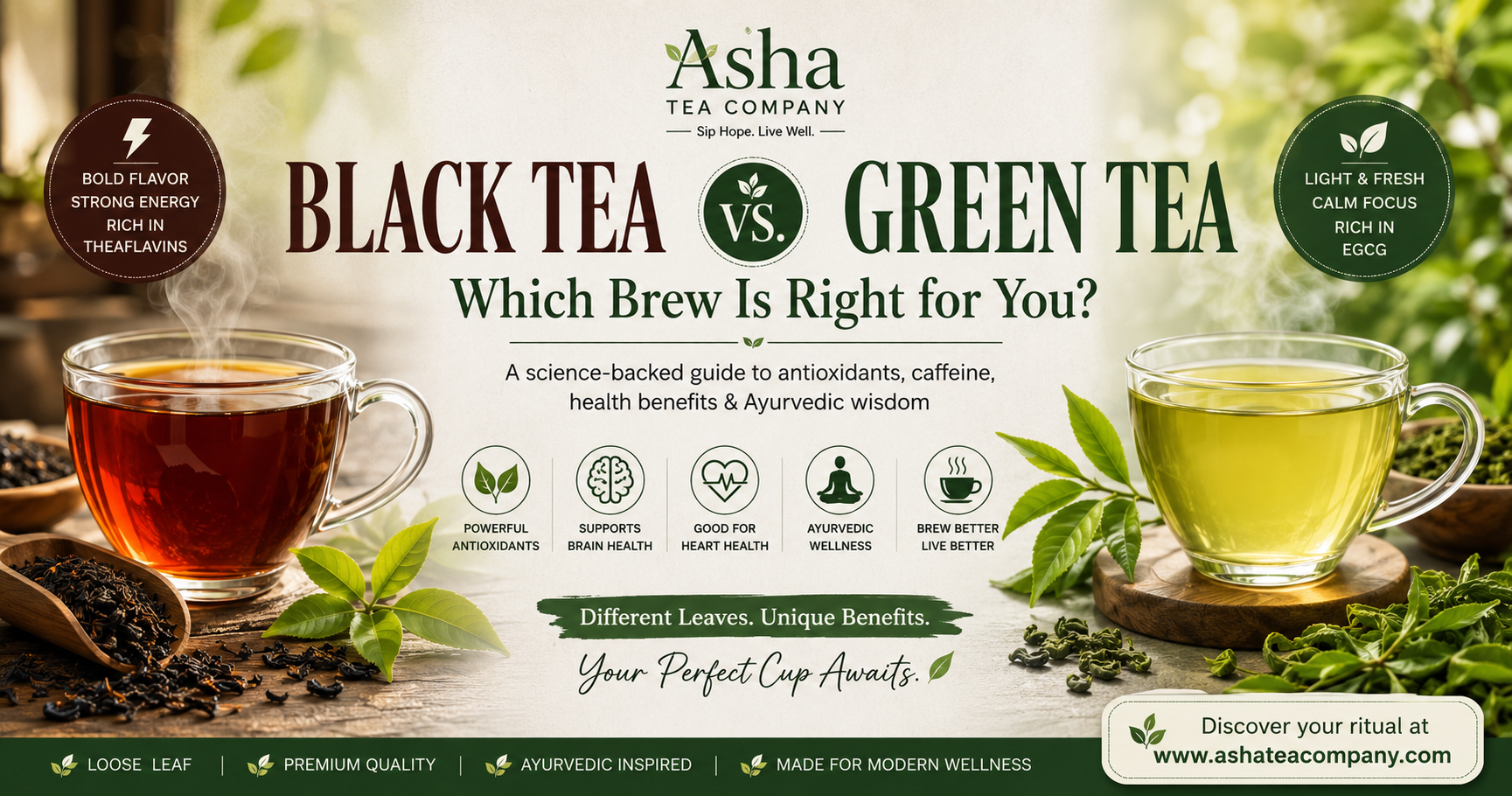
Both offer impressive health benefits. Green tea is naturally rich in catechins such as EGCG, while black tea contains theaflavins and thearubigins. Each supports wellness in different ways.
Yes. Black tea is an excellent source of antioxidants, particularly theaflavins and thearubigins, which are formed during oxidation.
Black tea generally contains 40–70 mg of caffeine per cup, while green tea usually contains 25–45 mg.
Yes. Many people enjoy black tea in the morning and green tea later in the day to benefit from the unique characteristics of each.
If you enjoy bold flavors, black tea may be the easiest place to start.
If you prefer lighter, refreshing flavors, green tea is an excellent choice.
The debate between black tea and green tea has continued for generations, but perhaps the most meaningful answer is this:
You don’t have to choose just one.
Both teas begin with the same remarkable leaf, yet each follows its own unique journey.
Green tea preserves nature’s original catechins, offering a light, refreshing cup rich in EGCG and gentle focus.
Black tea embraces transformation, developing theaflavins that create bold flavor, comforting warmth, and a robust morning brew.
Neither tea is better than the other.
They simply support different moments in your day, different seasons of the year, and different wellness goals.
At Asha Tea Company, we believe tea is more than a beverage—it is a daily ritual that nourishes the body, calms the mind, and creates space to slow down in a fast-moving world.
Whether you reach for the vibrant freshness of green tea or the comforting richness of black tea, every cup is an opportunity to care for yourself with intention.
So brew thoughtfully.
Sip slowly.
And let every cup become part of a healthier, more mindful lifestyle.
Explore our collection of premium green teas, black teas, Ayurvedic blends, and functional wellness teas—carefully crafted to help you enjoy every sip with purpose.
Sip Hope. Live Well.