- Welcome to Asha Tea Company
- +91 9082650573
- ashateacompany01@gmail.com

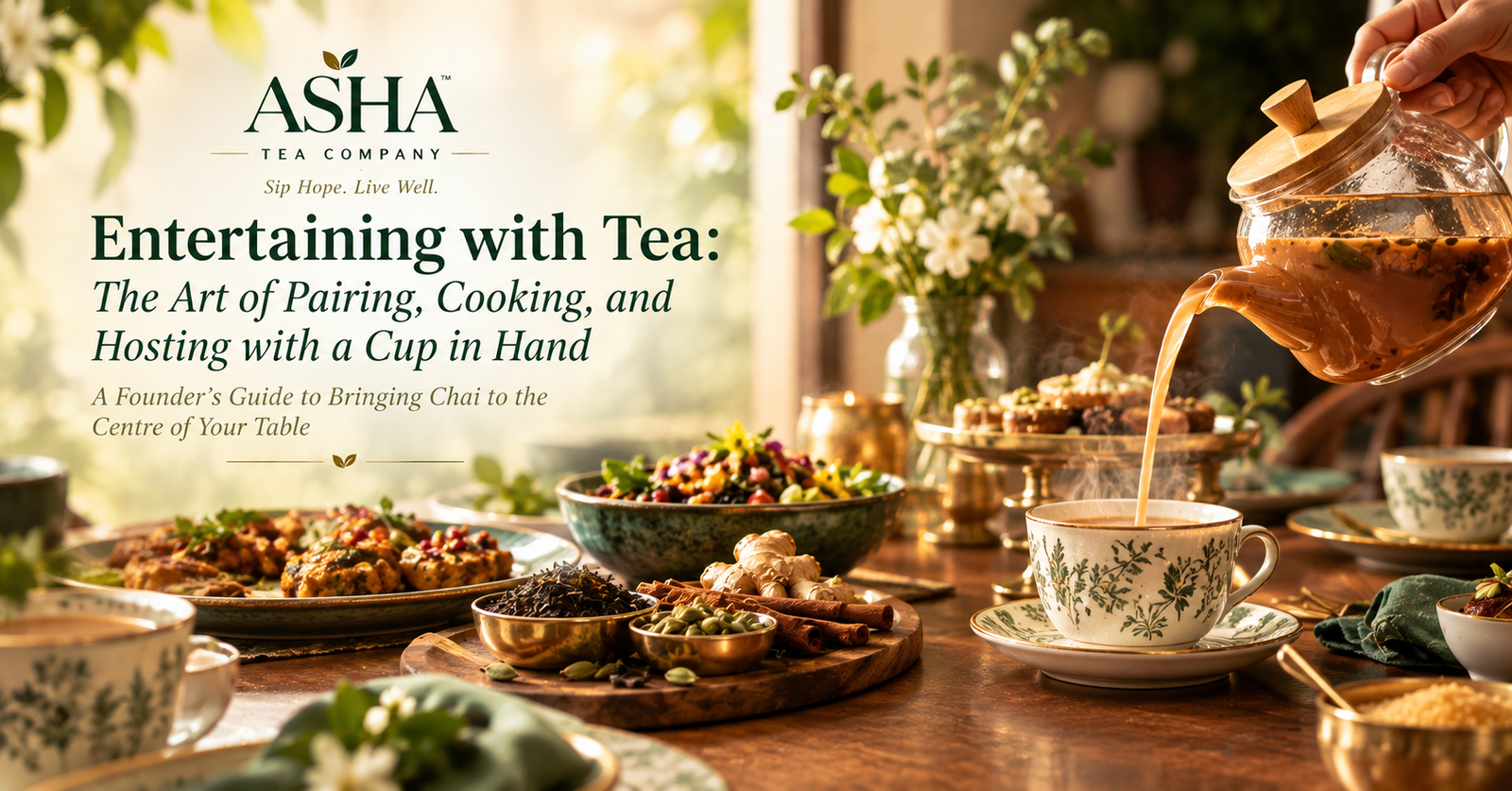
I still remember the first dinner I hosted where tea, not wine, sat at the centre of the table. My guests looked faintly confused when I poured a smoky Kashmiri kahwa beside the roasted lamb instead of a glass of red. By dessert, three of them were asking to take the tin home. That night taught me something I have carried into every menu I have planned since: tea is not a beverage you serve alongside a meal, it is a guest you invite to the meal itself.
When it comes to entertaining with tea, there are really two doors you can walk through, and both lead to the same warm room. The first is pairing tea with food, the way a sommelier might pair wine, matching tannins, sweetness, and aroma to a dish course by course. The second is treating tea as an actual ingredient, whether that means folding dried leaves straight into a marinade, steeping a strong brew down into a glaze, or using spent tea leaves to smoke a piece of fish on the stovetop. Most people entertaining at home only ever open one of these doors. I want to convince you to open both.
Tea pairing works on the same logic that wine pairing does, only gentler on the body and, frankly, on the wallet. A high-tannin black tea, poured slightly strong, can do exactly what a bold red wine does beside a rich curry or a slow-cooked mutton — it cuts through fat and resets the palate between bites. A green tea, grassy and light, sits beautifully next to steamed fish, delicate paneer, or a simple cucumber raita, because it never fights for attention. Floral blends like jasmine or rose-infused chai lift a dessert course the same way a dessert wine would, matching sweetness with sweetness instead of competing against it.
What I love most about tea pairing is how forgiving it is compared to wine. You will not ruin a dinner party by pairing the “wrong” tea with the wrong course the way a poorly chosen Cabernet might clash with a delicate soup. Tea tends to be more diplomatic. A well-brewed Ayurvedic chai, warm with ginger and cardamom, can comfortably sit through an entire multi-course meal, adjusting its role from palate cleanser to dessert companion without ever feeling out of place.
The second door, cooking with tea, is where things get genuinely exciting for anyone who loves experimenting in the kitchen. Dried tea leaves, ground fine, can be rubbed directly onto meat before searing, the same way you might use a spice rub, lending a faint smokiness and a tannic backbone that plain salt and pepper never could. A strongly brewed pot of black tea, reduced down on low heat, becomes a glaze for duck, salmon, or even roasted vegetables, the natural bitterness balancing beautifully against honey or jaggery. Green tea powder folded into a batter gives cakes and shortbread an earthy, slightly vegetal note that pairs unexpectedly well with citrus.
Even our own Kadak Chai has found its way into kitchens far beyond the teacup. Home cooks have written to tell me they simmer it down into a reduction for glazing chicken thighs, or steep it directly into rice pudding instead of plain milk, letting the cardamom and clove do double duty as both spice and story. Tea Masala, built originally for the cup, works surprisingly well whisked straight into a butter for basting roasted sweet potatoes or corn. Once you start thinking of tea as a spice rather than a drink, an entire second pantry opens up in front of you.
There is an emotional shift that happens the moment tea becomes part of a dinner party rather than an afterthought served with dessert. Wine announces a certain kind of evening — a little formal, a little performative. Tea, even when poured with intention and ceremony, keeps a table feeling like someone’s home rather than a restaurant. Guests lean in rather than lean back. Conversations slow down instead of getting louder. I have watched this happen at my own table more times than I can count: the moment a fresh pot of chai arrives, the room quiets, shoulders drop, and people start telling each other the truth a little more than they were twenty minutes earlier.
This is the real reason I built Asha Tea Company around Ayurvedic tradition rather than trend-chasing wellness marketing. A meal built around tea carries an unspoken invitation to slow down, the same invitation my own grandmother extended every evening without ever having to say it out loud. Nishkama karma, the idea from the Bhagavad Gita of acting without attachment to outcome, shows up quietly here too — you brew the pot, you serve it with care, and whatever conversation or connection follows is simply allowed to unfold on its own.
You do not need an elaborate menu to begin entertaining with tea. Start with one course. Brew a pot of Digestive Fiber blend to serve alongside a lentil soup, letting the fennel and cumin notes echo what is already in the bowl. Offer Calm & Sleep tea instead of a nightcap at the very end of the evening, when your guests are lingering by the door not quite ready to leave. Try folding a spoonful of loose Tea Masala into a butter or ghee and brushing it over roasted vegetables before they go into the oven. None of these require special equipment or professional training, only a willingness to treat tea as more than background noise at your table.
If you want to take this further than a single course, think of your evening the way you would plan a wine dinner, only warmer. Open with a light green tea alongside a starter of steamed dumplings or a citrus salad, letting its grassy freshness wake up the palate without weighing it down. Move into your main course with a stronger, maltier black tea if you are serving something rich like a slow-braised curry or a roast, allowing the tannins to do the quiet work a heavier red wine usually gets credit for.
Close the meal with a spiced chai beside something sweet — saffron kheer, a cardamom cake, or simply squares of dark chocolate — and let the spices in the cup echo the spices on the plate. None of this needs to be rigid. Tea, unlike wine, rarely punishes an imperfect pairing, which makes it a remarkably forgiving way to build your very first tea-forward menu.
I have also started encouraging friends to think about temperature contrast the way they might think about a cheese board. A chilled, lightly sweetened iced tea beside something spicy resets the mouth in a way warm tea cannot. A steaming cup beside something cold, like a scoop of kulfi or a fruit sorbet, creates the same delightful contradiction that a warm chocolate lava cake does beside cold vanilla ice cream. Entertaining with tea is not only about matching flavours; sometimes it is about matching sensations, warmth against cold, brightness against richness, letting the table hold two opposite feelings at once.
Every chef will tell you a great meal is built around a centrepiece, one flavour or idea the rest of the courses orbit around. I would simply argue that tea deserves that role far more often than it currently gets it. It is aromatic enough to guide a menu, gentle enough to never overwhelm a dish, and steeped in enough tradition to give a dinner party genuine meaning rather than just good taste. Once you let tea lead, even briefly, the whole evening tends to feel a little more like a ritual and a little less like a performance.
The next time you plan a dinner, or even a quiet evening for two, try opening both doors. Pair a course with a tea instead of a wine, and let one dish carry tea leaves or a tea reduction as an ingredient. Watch what happens to the room. Watch how the conversation slows, how someone inevitably asks what is in the pot, how the evening starts to feel less like an event you organised and more like a memory you are already inside of while it is still happening.
Explore Kadak Chai, Tea Masala, Digestive Fiber, and our full range of Ayurvedic wellness blends at www.ashateacompany.com, and discover how beautifully tea can lead a table, not just follow it. Hope of Happiness starts with a single pot, shared well.