- Welcome to Asha Tea Company
- +91 9082650573
- ashateacompany01@gmail.com

Tea has been cherished for thousands of years—not only for its comforting warmth and delicate flavors but also for its remarkable ability to support overall wellbeing. Across cultures, a simple cup of tea has symbolized calm, hospitality, mindfulness, and healing. Today, modern science is revealing that these ancient traditions were supported by something extraordinary hidden inside every tea leaf.
Every cup of tea contains naturally occurring plant compounds that work quietly within your body, helping protect cells from everyday stress and supporting long-term wellness. Among these compounds, one family stands above the rest: catechins.
At Asha Tea Company, we believe that understanding what is inside your cup transforms tea from an everyday beverage into a meaningful wellness ritual. Inspired by the timeless wisdom of Ayurveda and supported by scientific research, our blends are thoughtfully crafted to help you enjoy tea not only for its flavor but also for its remarkable health-supporting properties.
But simply drinking tea isn’t enough.
The way your tea is grown, processed, and most importantly, brewed, determines how many of these beneficial compounds actually reach your body.
In this guide, we’ll explore the fascinating science behind catechins, antioxidants, and free radicals, explain why proper steeping matters, and show you how a few simple brewing habits can help unlock the full potential of every cup.
For many people, tea is simply a morning habit or an afternoon refreshment.
Yet for centuries, traditional healing systems such as Ayurveda have viewed tea differently. Rather than seeing it as just another drink, Ayurveda recognizes tea as part of a balanced daily routine that supports both physical and mental wellbeing.
The ritual itself plays an important role.
Boiling fresh water.
Watching loose tea leaves slowly unfurl.
Breathing in the gentle aroma.
Waiting patiently as nature releases its goodness into your cup.
These small moments encourage mindfulness in a world that constantly demands our attention.
Modern research supports what ancient traditions have long understood.
When we slow down, even for a few peaceful minutes, our bodies naturally shift away from chronic stress. At the same time, the bioactive compounds found in tea begin working inside us, providing natural support for our cells and overall health.
Tea becomes more than hydration.
It becomes a daily act of self-care.
Every second of every day, your body performs billions of chemical reactions that keep you alive.
Breathing.
Digesting food.
Producing energy.
Repairing tissues.
Supporting immunity.
While these processes are essential, they also produce unstable molecules known as free radicals.
Free radicals are natural by-products of metabolism, but they can also increase because of modern lifestyle factors such as:
Unlike stable molecules, free radicals contain an unpaired electron, making them highly reactive. To become stable, they seek electrons from nearby healthy cells.
This process, known as oxidation, can gradually damage important cellular structures including:
When free radicals accumulate faster than the body can neutralize them, the result is oxidative stress.
Scientists believe oxidative stress plays a role in many age-related health concerns and contributes to inflammation, premature aging, and reduced cellular function.
While oxidative stress cannot be eliminated completely—it is a normal part of life—it can be managed through healthy lifestyle choices and antioxidant-rich foods and beverages.
This is where tea becomes truly remarkable.
Think of antioxidants as your body’s natural protectors.
Instead of allowing free radicals to damage healthy cells, antioxidants safely donate one of their own electrons. This simple action stabilizes the free radical without creating another unstable molecule, effectively interrupting the chain reaction before further damage occurs.
Nature provides antioxidants through colorful fruits, vegetables, herbs, spices, and one of the world’s oldest wellness beverages—tea.
Tea is especially valued because it contains a unique combination of plant compounds called polyphenols, which are among the most powerful naturally occurring antioxidants.
Unlike synthetic supplements, these compounds occur naturally within the tea leaf, working together in a balanced way that researchers continue to study.
Every cup of properly brewed tea delivers these protective compounds, offering gentle support for your body’s natural defense systems.
This is one reason tea has remained a trusted wellness companion across generations.
Among all the antioxidants found in tea, catechins deserve special attention.
Catechins belong to the polyphenol family and are naturally present in the leaves of the Camellia sinensis plant—the source of green tea, black tea, white tea, and oolong tea.
These remarkable compounds are responsible for much of tea’s reputation as a wellness-supporting beverage.
They also contribute to the light bitterness and pleasant astringency that tea lovers recognize in a well-brewed cup.
Scientists have identified four primary catechins naturally present in tea:
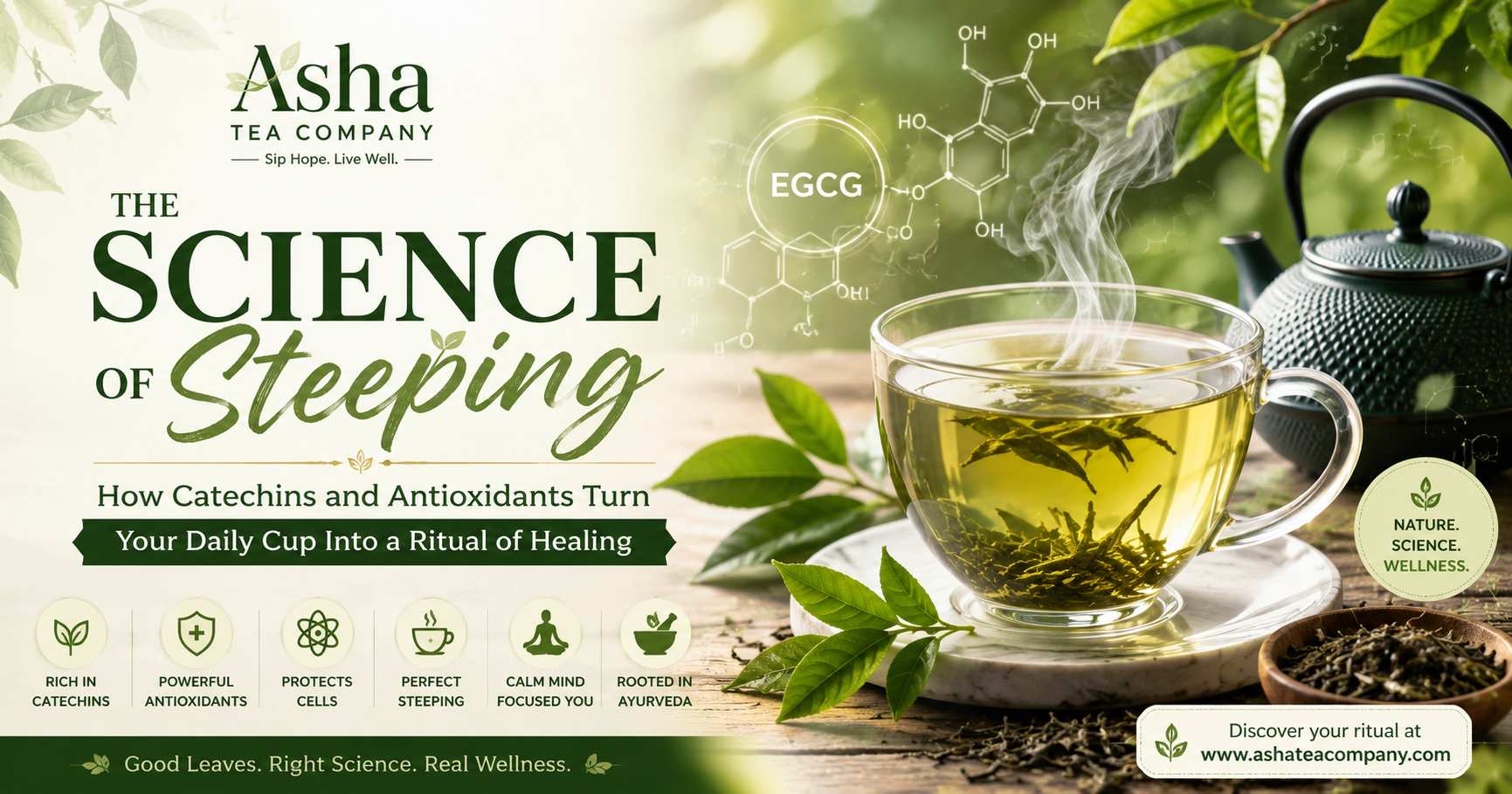
Among them, EGCG (Epigallocatechin Gallate) has received the greatest scientific attention.
Researchers have extensively studied EGCG because of its impressive antioxidant activity and its potential role in supporting:
Green tea contains the highest concentration of these original catechins because it undergoes minimal oxidation during processing.
This allows more of the leaf’s naturally occurring antioxidants to remain intact before they reach your cup.
At Asha Tea Company, we carefully select premium whole-leaf teas because preserving these natural compounds begins long before the brewing process—it starts with sourcing exceptional ingredients and treating them with care at every step.
One of the most fascinating facts about tea is that green tea, black tea, white tea, and oolong tea all come from the same plant—Camellia sinensis.
If they all originate from the same leaves, why do they look, taste, and behave so differently?
The answer lies in how the leaves are processed after they are harvested.
The amount of oxidation each tea undergoes changes not only its flavor and aroma but also its antioxidant profile. This is why every type of tea offers its own unique wellness benefits.
Understanding this process helps you choose the right tea for your lifestyle while appreciating the remarkable science behind every cup.
Green tea is the least processed of all traditional teas.
Soon after harvesting, the fresh leaves are gently heated or steamed to stop oxidation. This preserves much of the leaf’s original chemical composition, allowing it to retain the highest concentration of natural catechins—especially EGCG (Epigallocatechin Gallate).
Because these delicate compounds remain largely intact, green tea has become one of the world’s most researched wellness beverages.
Scientific studies continue to explore how its antioxidant profile may support:
Its light, refreshing taste reflects this minimal processing, making it an excellent choice for anyone seeking a clean and antioxidant-rich daily beverage.
At Asha Tea Company, our green tea blends are crafted to preserve these naturally occurring compounds while delivering a smooth, enjoyable drinking experience.
Many people mistakenly believe that black tea contains fewer antioxidants than green tea.
In reality, black tea simply contains different antioxidants.
During oxidation, many catechins naturally transform into compounds called:
These antioxidants give black tea its deep amber color, bold flavor, and rich aroma.
Although their chemical structure differs from catechins, research suggests they also contribute to overall wellness by supporting cardiovascular health and protecting cells from oxidative stress.
Oolong tea sits beautifully between green and black tea.
Because it is only partially oxidized, it contains a combination of both original catechins and newly formed theaflavins, offering a wonderfully balanced flavor profile and antioxidant composition.
Rather than asking which tea is “best,” it’s more helpful to understand that each variety offers its own unique strengths.
The right tea often depends on your personal taste, wellness goals, and daily routine.
Even the highest-quality tea leaves cannot deliver their full potential if they are brewed incorrectly.
This is where the science of steeping becomes incredibly important.
Brewing tea is a delicate extraction process.
When hot water meets tea leaves, hundreds of beneficial compounds—including catechins, flavonoids, amino acids, minerals, and aromatic oils—begin dissolving into your cup.
However, these compounds are surprisingly sensitive.
Water that is too hot can damage delicate antioxidants.
Water that is too cool may leave many beneficial compounds trapped inside the leaf.
Similarly, steeping tea for too long can release excessive tannins, creating bitterness while reducing the overall drinking experience.
Finding the perfect balance is what transforms a simple cup into a wellness ritual.
Different teas require different temperatures because each leaf has its own chemical composition.
| Tea Type | Ideal Temperature | Steeping Time |
|---|---|---|
| Green Tea | 75–80°C | 2–3 minutes |
| White Tea | 70–75°C | 3–4 minutes |
| Oolong Tea | 85–90°C | 3–4 minutes |
| Black Tea | 90–95°C | 3–5 minutes |
| Herbal Blends | 90–95°C | 5–7 minutes |
If you don’t own a tea thermometer, simply boil fresh water and allow it to cool for about three minutes before pouring it over green tea leaves.
This simple habit helps preserve delicate catechins while producing a smoother, sweeter cup with less bitterness.
Absolutely.
Not all tea is created equal.
Premium whole-leaf tea retains much of its natural structure, allowing beneficial compounds to be released gradually during brewing.
This creates:
Many mass-produced tea bags, however, contain finely broken tea particles often referred to as “tea dust.”
Because these tiny particles have a much larger surface area, they release tannins quickly, resulting in a stronger—but often harsher and more bitter—cup.
Whole leaves also preserve many of the essential oils responsible for tea’s delicate aroma and complex flavor.
At Asha Tea Company, we believe quality begins with carefully selected premium ingredients.
Every thoughtfully crafted blend reflects our commitment to combining Ayurvedic wisdom with modern nutritional science, ensuring that every cup delivers both exceptional taste and meaningful wellness support.
To make every cup count, follow these simple expert tips:
✔ Always use freshly drawn water.
✔ Avoid repeatedly boiling the same water.
✔ Brew only the amount you plan to drink.
✔ Use filtered water whenever possible.
✔ Measure your tea accurately instead of guessing.
✔ Give the leaves enough room to unfurl.
✔ Enjoy your tea soon after brewing for maximum freshness.
Small improvements in your brewing routine can make a remarkable difference in both flavor and antioxidant preservation.
One of the reasons tea feels so different from coffee isn’t just because it contains less caffeine—it’s because tea contains a remarkable natural amino acid called L-theanine.
Found almost exclusively in tea leaves, L-theanine has become one of the most researched compounds in nutritional science because of its unique effect on the brain.
Rather than creating a sudden burst of energy followed by a crash, L-theanine works alongside tea’s naturally occurring caffeine to promote what researchers often describe as “calm alertness.”
This balanced state allows many tea drinkers to feel:
For professionals, students, entrepreneurs, and anyone navigating a busy lifestyle, this combination can make tea an ideal companion throughout the day.
It’s one of the reasons tea has been enjoyed for centuries during meditation, study, creative work, and mindful living.
At Asha Tea Company, we believe wellness isn’t only about physical health—it’s also about creating moments of mental clarity and emotional balance.
Every cup offers an opportunity to pause, breathe, and reconnect with yourself.
Modern life moves quickly.
Notifications never stop.
Meetings fill our calendars.
Stress quietly becomes part of our routine.
Ironically, many people drink tea while continuing to work, scroll through their phones, or rush to the next task.
But tea has always invited us to do something different.
Slow down.
Notice the aroma.
Watch the steam rise.
Feel the warmth of the cup in your hands.
Take that first mindful sip.
These small actions may seem insignificant, yet they create a moment of intentional presence.
Ayurveda has long recognized that wellness is built through consistent daily rituals rather than occasional dramatic changes.
This philosophy, known as Dinacharya, teaches that small habits practiced every day create lasting wellbeing.
Your morning cup of tea can become one of those habits.
Not simply because of the antioxidants it contains, but because it reminds you to care for yourself—even if only for five peaceful minutes.
When combined with tea’s naturally occurring catechins, flavonoids, and L-theanine, this mindful ritual becomes a powerful part of a healthy lifestyle.
Many people begin drinking tea with enthusiasm but struggle to make it part of their routine.
The easiest way to build any healthy habit is to connect it with something you already do every day.
For example:
Consistency matters more than perfection.
Rather than waiting for the “perfect” time, simply allow tea to become a natural part of your daily rhythm.
To get the most from every cup:
✔ Choose premium whole-leaf tea whenever possible.
✔ Brew with the correct water temperature.
✔ Follow the recommended steeping time.
✔ Avoid adding excessive sugar.
✔ Drink your tea fresh.
✔ Stay consistent.
Over weeks and months, these small choices become meaningful investments in your long-term wellbeing.
Even premium tea cannot reach its full potential if it is brewed incorrectly.
Here are some common mistakes that can affect both flavor and antioxidant preservation.
Green and white teas contain delicate catechins that can be damaged by excessively hot water.
Long brewing times release excess tannins, creating bitterness without significantly increasing antioxidant extraction.
Whole-leaf teas generally provide a richer flavor, better aroma, and a more balanced infusion than heavily processed tea dust.
Excess sugar may overshadow tea’s natural flavor and work against your overall wellness goals.
Freshly brewed tea offers the best taste and preserves more of its naturally occurring beneficial compounds.
Fortunately, these habits are easy to improve, allowing every cup to become more enjoyable and more rewarding.
Catechins are natural polyphenol antioxidants found in tea leaves. They help protect cells from oxidative stress and contribute to many of tea’s wellness benefits.
Green tea generally contains the highest concentration of original catechins because it undergoes minimal oxidation during processing.
EGCG (Epigallocatechin Gallate) is the most abundant and extensively researched catechin found in green tea. It is known for its powerful antioxidant activity.
Yes. Brewing green tea at approximately 75–80°C helps preserve delicate antioxidants while preventing bitterness.
Premium whole-leaf tea generally offers superior flavor, aroma, and a more balanced extraction compared to finely broken tea found in many standard tea bags.
Explore the thoughtfully crafted collection of Asha Tea Company blends and experience how premium whole-leaf teas can transform an everyday beverage into a meaningful wellness ritual.
Sip Hope. Live Well. 🍃





Black Tea Vs Green Tea | Which Tea Is Better For Your Health?
July 15, 2026[…] The Science of Steeping: How Catechins and […]
EGCG Vs Theaflavins | Green Tea Vs Black Tea Antioxidants
July 15, 2026[…] The Science of Steeping: How Catechins and […]
Green Tea Before Meals: Benefits, Timing & Ayurvedic Wisdom
July 25, 2026[…] is a chemistry to this too, and it is quietly beautiful. Green tea is rich in catechins — plant antioxidants, most notably EGCG (epigallocatechin gallate) — responsible for much of […]